500 Words on Cryptocurrencies
 It will likely come as little or no surprise that cryptocurrencies like Bitcoin, Litecoin, and Dogecoin (my favorite) are frequent topics of conversation among futurist types. After all, they're supposed to be paradigm-breaking disruptions of the status quo, or something. But I still haven't gotten over my sense that something isn't quite fully-baked about the current generation of digital currencies, and I'm going to spend my ~500 words here trying to spell out why.
Cryptocurrencies are computationally-derived mathematical artifacts intended to function as money -- they're to be used to store value and to be exchanged for goods and services. The difference between cryptocurrencies and the US Dollar (or other sovereign-state currency) is that the Dollar is backed by the "full faith and credit" of the United States, meaning that as long as the US is a functioning political entity, the dollar can be used to (at minimum) pay American taxes. Conversely, cryptocurrencies are backed by mutual agreement; as long as the market for it exists, a cryptocurrency has some value. The logic behind cryptocurrencies isn't new, and can be seen in the various complementary currencies that have been used for decades in communities around the world, often (as with some cryptocurrencies) with an explicit social or political goal.
Many supporters of cryptocurrencies prefer to draw a parallel to gold, which is not under the control of any single political entity and does not have a set value, instead being priced based on how much people will pay for it (in another currency). This floating value of cryptocurrencies is one recognized challenge for their continued utility. As economist Paul Krugman and others have pointed out, gold has a minimum value, due to its use in industry and jewelry; cryptocurrencies have no minimum value, and could in principle crash to a level where they have effectively zero worth. Hoarding, regulatory decisions, and fraud can all cause wild swings in currency price. This floating value, which for many cryptocurrencies can be extremely volatile, impedes use as stable media of exchange. If the trading value of a Bitcoin versus a Dollar varies throughout the day, a business owner that primarily buys and sells and pays taxes in Dollars takes a risk any time he or she sets a price in Bitcoins. Some businesses may be willing to swallow that risk in order to gain the support of Bitcoin advocates, but for many others, it's just not worth the hassle.
Solving the floating value problem will be difficult, not for arcane economic reasons, but because there are as yet no physical communities where a cryptocurrency serves as a primary currency, usable for a broad variety of run-of-the-mill transactions. No place for the currencies to create a persistent, mutually-understood perceived value outside of its value in exchange for a sovereign currency. Where the users know at a gut level what it means to say that something costs (for example) 100 Bitcoin, the way an American knows what it means when something costs $100. Until then, cryptocurrencies will always be secondary at best, somewhat more fungible than gold coins from World of Warcraft. And that points to what may be the source of my continued skepticism about the current generation of cryptocurrencies: advocates have embraced the argument that all money is imaginary, that the vast majority of transactions now are digital, and that we now live in a globalized market, but have neglected the corresponding social and political grounding that makes this digital decentralization viable.

 • Personal Urban My Accessibility!: I'm split between thinking this is silly and thinking that it's potentially quite interesting; I'll probably decide that it's silly, but then lament that the useful stuff got lost in the induced giggles.
 Participatory Panopticon edition!
 Happy Happy Joy Joy edition.
 Quick hits:
 Because "Bottomsight" just sounds too naughty.

 Tired & busy with Superstruct. But check these out:
 New site logo -- what do you think?

 • Flooded London: Media designers

 • Early Bright Green: "It is when man shall have discovered the means of restocking the sea and of controlling its supplies that his "dominion over the fish" will be perfect. The power to deplete, which so far marks the utmost limit of his advance, is mere tyrrany. Dominon should embrace a more benevolent sway, and to that end no doubt the efforts of science and the might of law will presently join forces."
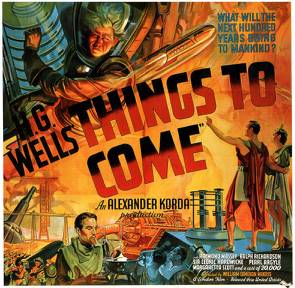 The title of this post is a quote from Alfred North Whitehead. What I like about the line is that it can be read in a couple of different ways: the role "the Future" plays in our lives is to be the danger to come, that is, to symbolize the rising challenges; and being dangerous is the "Business of the Future," i.e., risk is the industry of tomorrow. Both are likely true.
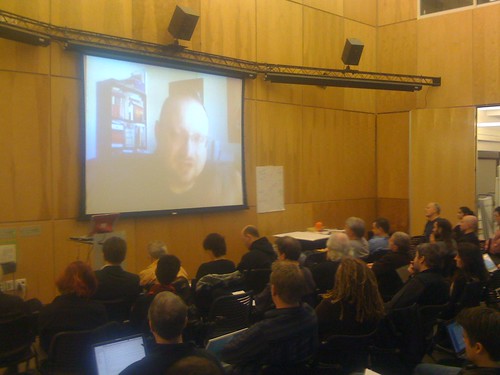


 The smart environment era is just about upon us, and I'm looking forward to seeing what happens when our previously "dumb" surroundings become embedded with Internet-connected intelligence. This is a subject I've followed for awhile, so I have some basic expectations as to what we'll see. Rapid adoption for social networks? Check. Greater energy efficiency? Check. Making the invisible, visible, in order to understand the subtle flows of information that support our lives? Esoteric, but check.
 Hey there, folks out there in Internet-land -- do you find these "topsight" posts useful or interesting? I sometimes puzzle over whether the various individual entries would be better off as individual short posts, rather than as a catch-all post. The downside of that is my apparent inability to keep individual posts terse. The upside would be clearer topics and easier inbound links, should you find yourself wanting to point to a particular item.
 Word of the Week: Paleovirology: The study of "fossil" viruses living in our cells as
 Because technically it was still Monday when I started this.
 I have too many windows open to pages that I really would like to post extensive commentary on if I can just get around to it.
  Trying to get back into the blogging groove I found just before my Budapest trip. Here are some of the items of note I've stumbled across recently.
 This is the 3-wheel car that gets over 200mpg as a plug-in hybrid, and looks like it's straight out of a 70s science fiction movie.
 "Hey, Jamais, what's up with the lack of blogging? You turning into a slacker or something?"
 Summer Solstice: the longest day of the year!
 Ethan Zuckerman
 Doug Englebart
 Mike Liebhold
 me
me My month of travel is over, and I look forward to sleeping in my own bed.
 Plowing through interesting links accumulated during my travel.
 Busy week coming up: working a panel on the future of sustainability tomorrow;
 • CardioBot: The
 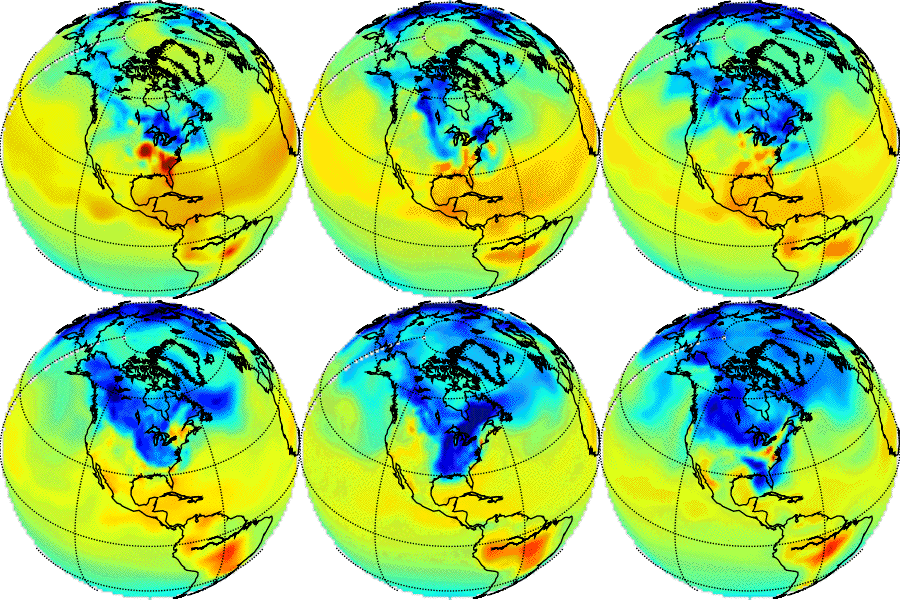 • Mapping the Present, Seeing the Future: Wired's Danger Room blog
 • The Web is People!: Michael Wesch, Assistant Professor of Anthropology at Kansas State University, has assembled a terrific four-and-a-half-minute video called "
 • Akira Kurosawa's
  • 17-Year-Old Madhavi Gavini, a student at the Mississippi Institute of Science and Mathematics, has
 • Finally,
  Multiple deadlines this week, plus meetings -- but interesting stuff keeps rolling in.
 Let's see, lots of apocaphilia lately...
 Bruce Sterling has kicked off his annual "
 It's a holiday week here in the US, and my posting will be a bit more sporadic than usual. Happy Thanksgiving, US readers...
 . As the title suggests, it's the story of Stewart Brand, and his influence from the early days before Whole Earth all the way through GBN to his most recent work with Long Now. RU Sirius (who tends to travel in circles that overlap Brand's)
 Okay, giddiness over, back to business.
 So, gone for about a week, followed by a week of meetings and deadlines, and I end up with a serious backlog of interesting/cool/relevant links that really should blog more thoroughly. Rather than bemoan my fate and slowly trickle them out until I get overwhelmed by more current material, I'll just go ahead and bullet point 'em with very short explanations as to why.
 It's End of the World time at Open the Future Topsight!
 Returning to the multiple links in a post format in an (unsuccessful) effort to curb my verbosity.
 This is astounding. The sleeping pill
 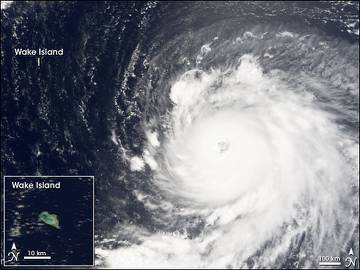 Lots of items backed up here.
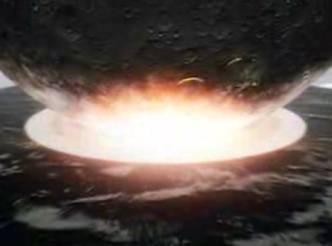 Today's Topsight Tuesday is all about things that worry and frighten us: massive asteroid impacts, terrorism, and Powerpoint.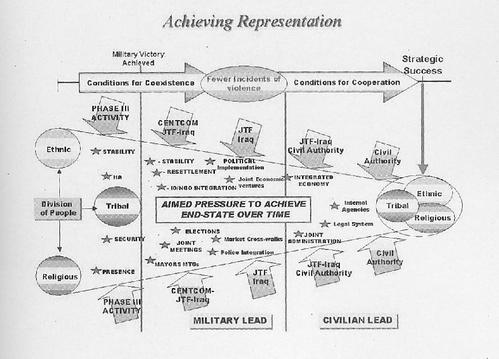
 "The guns of August." For anyone with a background in military/political history, that phrase is redolent with sadness. It's the title of
 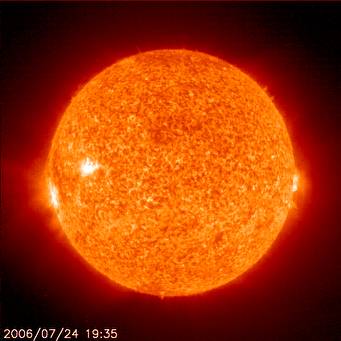 The temperature here hit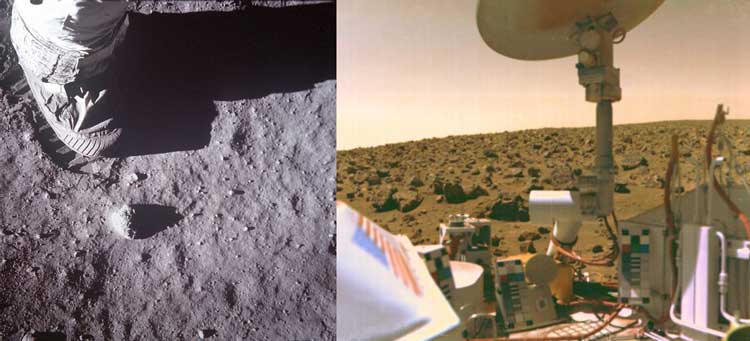

 I had the somewhat surreal experience last night of participating in a focus group on the California energy industry. My experience was odd because, about a quarter of the way through, the moderator was called out by the faceless folks behind the mirror, and when he returned, he asked that I, in essence, keep my mouth shut. I literally knew too much about the world of energy production, distribution and efficiency to make a good focus group participant. I was told that they'd love to hear what I had to say at the end, if there was enough time. I did manage to sneak a couple of comments in here and there, but I ended up being more an observer than anything else.
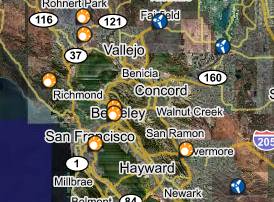 Monday doesn't come until Thursday this week.
 Light blogging week (of course, the week when I get a
  • Turning Greenhouse Gases into Greenhouse Glass: One of my mantras when I was writing at WorldChanging was that "we can't assume that all the tools we'll have for fighting global problems have already been invented." Today brings
  "Topsight" is one of those words that deserves wider use, especially within the scenario/futurist/early indicators community. It means a view, or understanding, of all aspects of a problem or situation: the components, the context, the drivers, the participants... everything. The Big Picture, but with less emphasis on broad structures and more emphasis on completeness. Computer scientist David